
Diagnostic
Clinical
Sleep Assessment
at AEOM
Clinical-grade sleep diagnostics, performed at home — the most under-diagnosed driver of fatigue, weight gain and cognitive decline
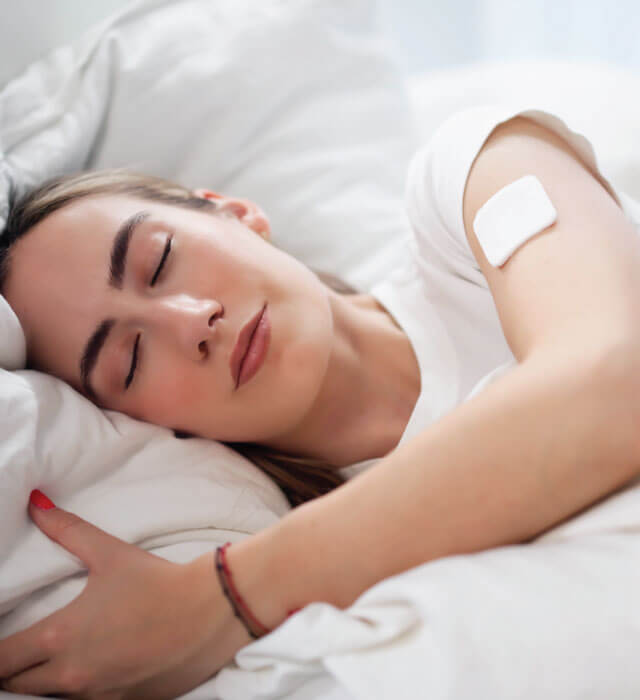
Our Clinical Sleep Assessment uses the WatchPAT system — the most clinically validated home sleep apnea test available, used in NHS sleep clinics and approved under the 2017 American Academy of Sleep Medicine HSAT Clinical Practice Guidelines. Worn for one night at home, returning to AEOM the next day, it produces a comprehensive sleep report covering apnea-hypopnea events, oxygen saturation, sleep architecture, body position, snoring and heart rate. For most patients dealing with fatigue, brain fog, poor recovery or stubborn weight, this is the test their GP hasn't run.
Key facts strip:
- £475 — full assessment with clinical review
- Single overnight at home, results within 7 days
- 89% correlation with in-lab polysomnography (PSG)
- No needles, no clinic stay, no wires
From
£1,400
Downtime
None
Session
30–75 min
Areas
Face · Neck · Body
Results
12–18 months
Introduction
The sleep test
most people should have had years ago
Sleep is the single most-overlooked determinant of how you feel, perform and age. Poor sleep is implicated in fatigue, brain fog, weight gain, blood sugar dysregulation, cardiovascular risk, mood disorders, hormonal imbalance and cognitive decline. Despite this, the vast majority of UK adults have never had their sleep clinically assessed — and the most common cause of disrupted sleep (obstructive sleep apnea) is estimated to be undiagnosed in 80% of those affected.
The Clinical Sleep Assessment at AEOM addresses this directly. We use the WatchPAT system — a clinical-grade home sleep testing platform with 89% correlation to in-lab polysomnography (the gold standard sleep study), used in NHS sleep clinics and recognised under the American Academy of Sleep Medicine Home Sleep Apnea Testing Clinical Practice Guidelines (2017).
You wear the device for one night at home. The next morning, the data uploads to the secure clinical platform via your smartphone. Within several days, you receive a comprehensive sleep report — and a clinical discussion of what it shows and what to do about it.
For most patients, this is one of the most actionable single tests they will ever have run. The findings often explain things that have been unexplained for years — and unlock the right pathway forward.
Introduction
What sleep affects
(and why most adults aren't sleeping well)
Sleep isn't downtime. It's when your body performs most of its critical regenerative, hormonal and cognitive work. Poor sleep — whether from sleep apnea, fragmented sleep, insufficient deep or REM sleep, or general sleep debt — affects nearly every system:
Cognitive function: Memory consolidation, learning, attention, decision-making and emotional regulation all happen during sleep. Chronic poor sleep is linked to long-term cognitive decline and increased risk of dementia.
Metabolic and weight: Sleep regulates ghrelin and leptin (hunger and satiety hormones), insulin sensitivity and glucose metabolism. Poor sleep is a major driver of stubborn weight gain, blood sugar dysregulation and type 2 diabetes risk.
Cardiovascular: Untreated sleep apnea is a recognised major risk factor for hypertension, atrial fibrillation, stroke and heart failure. The cardiovascular impact compounds silently over years.
Hormonal: Sleep affects cortisol rhythms, growth hormone release, sex hormones (testosterone in men, oestrogen and progesterone in women) and thyroid function. Sleep dysfunction is often a hidden driver of perimenopausal symptoms.
Recovery and immunity: Sleep is when most cellular repair, immune memory consolidation and inflammatory regulation happens. Chronic poor sleep impairs recovery, slows healing and increases infection susceptibility.
Mental health: Sleep dysfunction is bidirectionally linked with depression, anxiety and burnout — improving sleep often improves mental health outcomes more than any single intervention.
The Clinical Sleep Assessment is the diagnostic gateway to addressing each of these. If sleep is the underlying driver of how you feel — and for many patients, it is — no other wellness intervention will substitute for fixing it.

HOW IT WORKS
The WatchPAT technology, briefly
WatchPAT uses a proprietary signal called Peripheral Arterial Tonometry (PAT) — a non-invasive measurement of subtle changes in blood flow at the fingertip. PAT signal attenuation correlates with sympathetic nervous system activation, which reliably reflects the autonomic arousals that occur with each sleep-disordered breathing event.
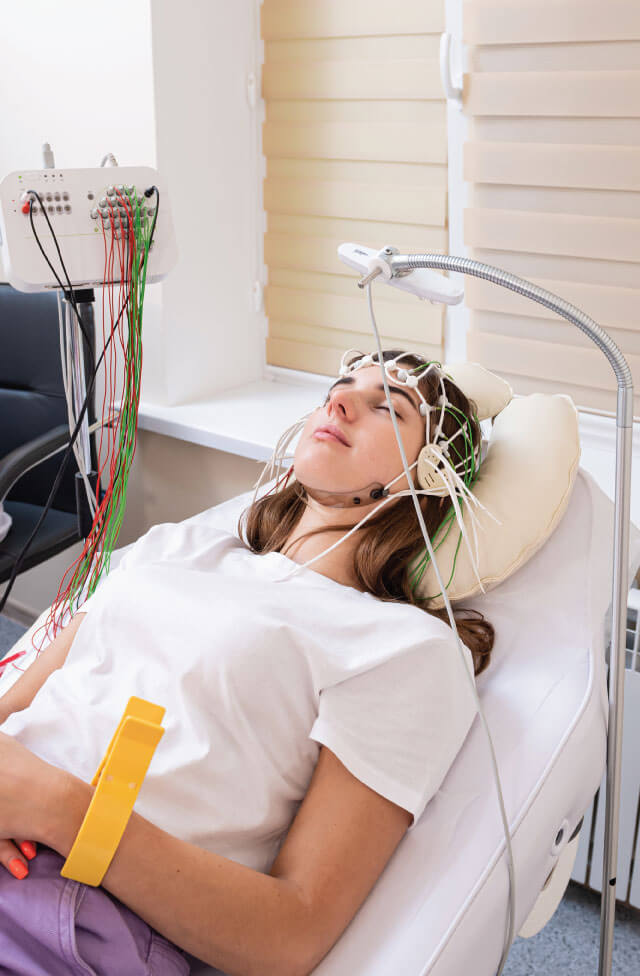
Combined with simultaneous measurements of oxygen saturation, heart rate, body position, snoring and chest motion, the system produces clinically validated data on a wide range of sleep parameters — without the wires, electrodes and overnight stay required for in-lab polysomnography.
WatchPAT measures 7 channels:
- PAT signal — autonomic nervous system activation reflecting breathing disturbances
- Heart rate — beat-by-beat throughout the night
- Pulse oximetry — oxygen saturation continuously monitored
- Actigraphy — movement-based sleep/wake differentiation
- Body position — including supine, prone, left, right (important because some sleep apnea is position-dependent)
- Snoring — frequency, intensity, distribution
- Chest motion — respiratory effort
The system has three points of contact:
- A small device worn on the wrist (similar to a chunky watch)
- A finger probe (similar to a hospital pulse oximeter)
- A small chest sensor (about the size of a 50p coin)
That's it. No mask, no nasal cannula, no electrodes glued to your scalp, no tangle of wires.
Why we use WatchPAT specifically:
The PAT signal has been clinically validated against in-lab polysomnography across multiple peer-reviewed studies, returning a 89% correlation — meaningfully higher than most home sleep tests, which typically miss central sleep apnea and REM-related events. WatchPAT also calculates AHI based on True Sleep Time (actual time slept) rather than total recording time — addressing a documented 20% misdiagnosis rate in cheaper home sleep tests that don't track actual sleep.
For a clinic using sleep diagnostics as part of broader wellness work, WatchPAT is the right tool.
WHO IT'S FOR
Who Clinical Sleep Assessment
is right for
Clinical Sleep Assessment is well-suited if you are:
Persistently tired despite getting enough sleep on paper
Experiencing morning headaches, dry mouth or waking unrefreshed
Dealing with brain fog, poor concentration or memory issues
A snorer — yourself or your partner has noticed snoring, choking sounds, or pauses in breathing
Carrying stubborn weight that hasn't responded to standard approaches (sleep apnea is a major hidden driver)
Managing hypertension poorly controlled with medication (sleep apnea drives resistant hypertension)
Concerned about cardiovascular risk — sleep apnea is a major modifiable cardiovascular risk factor
Experiencing perimenopausal symptoms — sleep dysfunction is often a hidden driver
In a demanding work or family period and noticing your cognitive performance is below baseline
A high-performing athlete or executive wanting to optimise recovery and performance
Over 50 and proactive about long-term cognitive health — sleep apnea is increasingly recognised as a dementia risk factorting to optimise recovery and performance
On our Energy & Recovery Programme — the assessment is included
Clinical Sleep Assessment may not be the right immediate test if you have:
An acute respiratory illness at the time of testing (results will be confounded)
A pacemaker or implanted electronic device that interferes with PAT signal (we'd discuss at consultation)
Severe peripheral vascular disease affecting fingertip blood flow
Already have a confirmed sleep apnea diagnosis with active treatment — re-testing may not be needed
Are looking specifically for insomnia diagnosis (rather than sleep apnea screening) — WatchPAT measures sleep quality but isn't the primary tool for chronic insomnia disorder
The Clinical Sleep Assessment is one of the highest-value diagnostic tests in wellness — and the patient profile is broader than most people assume.
WHAT TO EXPECT
Before, during the night and after
Before
In-Clinic Briefing (Day 1)
Clinic appointment (30 minutes): You visit AEOM to collect your WatchPAT device. We brief you on:
- How to wear the device
- The accompanying smartphone app and how to start the test
- What to do if you have questions overnight
- When and how to return the device the next day
The device is small, lightweight and comfortable. Most patients describe it as significantly less intrusive than they expected.
Preparation for the test night:
- Test on a "normal" night — your usual sleep schedule, your own bed
- Avoid alcohol for at least 4 hours before bed (alcohol can affect sleep apnea findings — both increasing severity transiently and confounding diagnosis)
- Avoid caffeine after early afternoon
- Take any regular medications as normal unless we've advised otherwise
- Charge your smartphone (the data uploads via the app)
During
During the Night
Setting up:
Before bed, you put on the wrist device, attach the finger probe, place the chest sensor on your sternum (it has a sticky pad), and start the recording via the smartphone app. The whole setup takes 2–3 minutes.
Sleeping:
You sleep normally. The device records throughout the night. Most patients describe forgetting they're wearing it within 10–15 minutes.
On waking:
You remove the device, the app uploads the data automatically. That's it.
After
Return and Review
Day 2:
Return the device to AEOM (WatchPAT ONE is disposable — for WatchPAT 300 users, the device is returned for clinical processing).
Within 7 working days:
Your sleep data is processed, automatically scored, and clinically reviewed. You receive a detailed sleep report and a 30-minute clinical review consultation to discuss the findings.
At the clinical review, we cover:
- Your apnea-hypopnea events and clinical interpretation
- Sleep architecture (light, deep, REM sleep distribution)
- Oxygen saturation patterns
- Snoring and body position findings
- What the results suggest about your sleep quality
- What — if anything — needs to be done next
WHAT THE REPORT MEASURES
Inside the sleep report
The WatchPAT report is genuinely comprehensive. A summary of what it covers:
Respiratory and Apnea Indices
- AHI (Apnea-Hypopnea Index) — events per hour of sleep. The primary metric for sleep apnea severity.
- AHIc (Central Apnea-Hypopnea Index) — differentiates central from obstructive events (important; many home sleep tests can't do this)
- RDI (Respiratory Disturbance Index) — broader measure including respiratory effort-related arousals
- ODI (Oxygen Desaturation Index) — frequency of significant oxygen drops
Oxygen and Pulse
- Oxygen saturation statistics — average, minimum, time below thresholds
- Pulse rate variability and patterns
Sleep Architecture
- True Sleep Time — how long you actually slept (not just time in bed)
- Sleep efficiency — percentage of time in bed actually asleep
- Sleep stage distribution — Light, Deep, REM percentages
- Sleep latency — how long to fall asleep
- REM latency — time to first REM sleep
- Number of wake events
Body Position Statistics
- Time spent in supine, prone, left and right positions
- AHI broken down by position (positional sleep apnea matters clinically)
Snoring Statistics
- Time spent snoring
- Decibel level distribution
- Snoring relative to body position
Severity Categorisation
- AHI severity classification (Normal / Mild / Moderate / Severe based on AASM criteria)
For most patients, the AHI, sleep architecture, and oxygen saturation findings are the most actionable elements. These tell us whether you have sleep apnea, how severe it is, whether your sleep quality is genuinely restorative, and whether oxygen drops during the night are affecting your wider health.
WHAT HAPPENS IF YOU HAVE SLEEP APNEA
Findings, referrals
and treatment pathways
If your assessment reveals clinically significant sleep apnea, AEOM doesn't treat sleep apnea ourselves — sleep apnea management sits firmly within specialist sleep medicine. What we do is provide a clear next-step pathway.
Mild findings (AHI 5–14)
We'll discuss what's clinically significant about the findings, what may be driving the events (positional, weight-related, anatomical, alcohol-related), and what lifestyle or positional adjustments may be worth trying. For mild findings, a follow-up assessment in 6–12 months is often appropriate. If symptoms are significant despite mild AHI, we'd recommend further investigation with a sleep specialist.
Moderate findings (AHI 15–29)
This level of sleep apnea typically benefits from formal treatment. We'd refer you to a sleep medicine consultant — either privately (we can recommend appropriate consultants in London) or via your GP for NHS referral. Treatment options at this level typically include CPAP, mandibular advancement devices (oral appliances), or in some cases positional therapy or surgical evaluation.
Severe findings (AHI 30+)
This level represents significant clinical concern, with meaningful cardiovascular, cognitive and metabolic implications. We'd refer you promptly to a sleep medicine consultant for formal diagnosis confirmation and treatment initiation. Most severe sleep apnea is treated with CPAP, which — when used consistently — produces dramatic improvements in symptoms and long-term health outcomes.
Normal findings (AHI <5)
If your AHI is normal but your symptoms persist, the report still provides valuable information. Sleep architecture, sleep efficiency, time in deep and REM sleep, oxygen saturation patterns and snoring data can all reveal sleep quality issues even without apnea. We'd discuss what the findings mean and what — if anything — to address.
The wider clinical context
Most sleep apnea patients we identify go on to be successfully managed by sleep medicine specialists. CPAP, while initially intimidating, is genuinely life-changing for most patients who use it consistently — typically restoring energy, cognitive function and cardiovascular health to a degree that surprises people.
THE HONEST PART
What this test will and won't do
Clinical Sleep Assessment is one of the most valuable wellness diagnostics available — but we'd rather be honest about what it does and doesn't do.
-
It screens for sleep apnea; it doesn't definitively diagnose every sleep disorder. Home sleep tests like WatchPAT are highly accurate for sleep apnea screening but not the right test for every sleep concern. For chronic insomnia disorder, parasomnias, restless legs syndrome, narcolepsy or REM sleep behaviour disorder, different evaluation is appropriate.
-
A normal result doesn't mean perfect sleep. Many patients with normal AHI still have sleep quality issues — fragmented sleep, insufficient deep sleep, poor sleep efficiency. The report often reveals these even when sleep apnea is ruled out.
-
It requires one good test night. Occasionally the data quality is insufficient (typically when the device hasn't been worn correctly, or in patients with unusual circulatory issues). If that happens, we re-test at no additional charge — WatchPAT's 98% success rate means this is rare, but we want you to know we'll deal with it appropriately if needed.
-
We don't treat sleep apnea. If findings require treatment, we'll provide clear referrals — not pretend we can do everything ourselves.
-
A single test reflects one night. Sleep quality varies night-to-night. For most patients the one-night assessment is representative; for patients where findings are borderline, a second night may be appropriate.
We'll discuss findings and limits honestly at your review.
SLEEP ASSESSMENT COMPARED — HOW IT DIFFERS
WatchPAT vs
other sleep assessments

WatchPAT vs In-Lab Polysomnography (PSG)
PSG is the gold standard — full overnight sleep study in a sleep lab, with EEG, EOG, EMG, ECG and full respiratory monitoring. It captures everything WatchPAT does plus brain wave activity and muscle activity, making it the diagnostic standard for complex sleep disorders. WatchPAT correlates at 89% with PSG for sleep apnea diagnosis — meaningfully accurate for screening. PSG is more comprehensive but requires an overnight stay, is significantly more expensive (typically £800–£1,500+ privately), and has long NHS waiting lists. For sleep apnea screening, WatchPAT delivers most of the value at a fraction of the cost and friction.
WatchPAT vs Standard Home Sleep Tests (e.g. ApneaLink, NoxT3)
Most home sleep tests rely on nasal airflow cannulas, which can be uncomfortable, displace overnight, and don't capture autonomic arousals. They also typically calculate AHI based on total recording time rather than true sleep time — a methodology that produces a documented 20% misdiagnosis rate. WatchPAT's PAT-based methodology, true sleep time calculation, and 7-channel measurement deliver meaningfully higher accuracy and patient compliance.
WatchPAT vs Consumer Wearables (Oura, Whoop, Apple Watch, Garmin)
Consumer wearables provide useful trend data on sleep duration, heart rate variability and sleep stages — but they are not diagnostic devices. They can suggest possible sleep quality issues but cannot diagnose sleep apnea or provide clinically validated data. Many of our patients arrive with months of Oura ring data suggesting "low sleep quality" — and the Clinical Sleep Assessment is what tells them why. The wearables and the clinical test are complementary, not substitutes.
WatchPAT vs NHS Sleep Clinic Pathway
The NHS sleep medicine pathway is genuinely excellent — but slow. Typical patient journey: GP referral → sleep clinic appointment (often 3–6 month wait) → home sleep test or polysomnography → results review → treatment initiation. Total timeline often 6–12 months. For patients where the cost of delay is high (active symptoms, cardiovascular risk, demanding career), private assessment via WatchPAT delivers results in 7 working days. For patients without time pressure, the NHS pathway works well — we'd advise honestly at consultation.
PRICING
Clinical Sleep Assessment pricing
Service
Price
Includes
Clinical Sleep Assessment
£475
WatchPAT device, in-clinic briefing, overnight test, automated and clinical report, 30-minute clinical review consultation, referral pathway if indicated
Repeat Assessment (within 12 months)
£395
Same inclusions, follow-up pricing
Same-day re-test (where first night data was inadequate)
Included
No additional charge
Klarna instalments available for assessments billed together with other services.
As part of a Programme:
- Energy & Recovery Programme (£1,495) — Clinical Sleep Assessment included
- Regenerative Performance (£2,495) — available as optional add-on
Membership: Optimisation Membership (£250/month or £2,500/year) — Clinical Sleep Assessment included once during the membership year, typically scheduled in month 6.
COMBINE WITH
Treatments that combine well
with Sleep Assessment
The Clinical Sleep Assessment is most valuable when combined with the broader diagnostic and wellness work that helps interpret findings and address underlying drivers.
Sleep Assessment + Comprehensive Wellness Panel
The combination delivered in our Energy & Recovery Programme. Bloodwork identifies metabolic, hormonal and inflammatory factors that affect (and are affected by) sleep. Sleep assessment identifies the sleep dimension specifically. Together, they explain most cases of persistent fatigue.
Sleep Assessment + Continuous Glucose Monitoring
Glucose variability through the night strongly correlates with sleep quality. Combining CGM with WatchPAT in patients with metabolic concerns reveals patterns that neither test shows alone — particularly useful in patients dealing with stubborn weight or pre-diabetes.
Sleep Assessment + Hormone Testing (where appropriate)
Sleep dysfunction often interacts with hormonal patterns — particularly in perimenopausal women and middle-aged men with low testosterone. We may recommend additional hormone testing alongside sleep assessment for the right patients.
Sleep Assessment + Hormone Testing (where appropriate)
Sleep dysfunction often interacts with hormonal patterns — particularly in perimenopausal women and middle-aged men with low testosterone. We may recommend additional hormone testing alongside sleep assessment for the right patients.
Sleep Assessment + Hormone Testing (where appropriate)
Sleep dysfunction often interacts with hormonal patterns — particularly in perimenopausal women and middle-aged men with low testosterone. We may recommend additional hormone testing alongside sleep assessment for the right patients.
Frequently asked questions
Is the WatchPAT actually accurate enough to diagnose sleep apnea?
For screening and diagnostic purposes, yes — to a clinically validated degree. WatchPAT has been compared against in-lab polysomnography (the gold standard) in multiple peer-reviewed studies and returns 89% correlation. The PAT signal is approved as a measurement methodology in the 2017 American Academy of Sleep Medicine Home Sleep Apnea Testing Clinical Practice Guidelines. For most patients, WatchPAT findings are sufficient to inform whether further investigation or treatment is needed. For complex cases (significant central sleep apnea, suspected non-apnea sleep disorders), in-lab polysomnography may still be recommended — and we'd refer appropriately.
Why not just use my Oura ring or Apple Watch?
Consumer wearables are useful for tracking sleep trends — duration, heart rate variability, broad sleep stage estimates — but they aren't diagnostic devices.
They can suggest possible issues but cannot diagnose sleep apnea, measure oxygen desaturation reliably, or provide clinically validated AHI/RDI/ODI metrics. Many of our patients arrive with months of wearable data showing "poor sleep quality" but no idea why. The Clinical Sleep Assessment is the diagnostic test that explains the underlying cause.
Can I just get this on the NHS?
Yes — NHS sleep medicine is genuinely excellent, but slow. The typical patient journey from GP visit to sleep test to treatment is 6–12 months. If you have meaningful symptoms, significant cardiovascular risk, or active functional impact from poor sleep, the private pathway gets you results in days rather than months. For patients without time pressure, the NHS pathway works well — and we'd advise honestly which is appropriate at consultation.
What if my test shows I have sleep apnea?
We don't treat sleep apnea ourselves — sleep apnea management sits within specialist sleep medicine. What we do is provide a clear referral pathway. For mild findings, we'd typically discuss lifestyle or positional adjustments and recommend follow-up assessment. For moderate-to-severe findings, we'd refer you to a sleep medicine consultant for formal diagnosis confirmation and treatment (typically CPAP, sometimes oral appliances or surgical evaluation). Most patients with significant sleep apnea respond extremely well to treatment.
Is it just for older people who snore?
No. Sleep apnea affects an estimated 1.5 million UK adults and is significantly under-diagnosed across all adult age groups. Patient profiles where assessment is genuinely useful include: high-performing athletes (training adaptation depends on sleep quality), executives in demanding roles, perimenopausal women (sleep disruption is often a major driver of perimenopausal symptoms), patients with stubborn weight gain, and adults with cardiovascular risk factors. Many of our patients on the Energy & Recovery Programme are in their 30s and 40s — and a surprising number reveal previously undiagnosed sleep dysfunction.
Can I test if I work shifts or have irregular sleep?
Yes — we'd recommend testing on a representative night. For shift workers, the test should reflect typical sleep, even if it occurs during the day. We'll discuss timing at the in-clinic briefing.
What does the actual test feel like?
Three points of contact — a wrist device about the size of a chunky watch, a finger probe similar to what hospitals use, and a small chest sensor about the size of a 50p coin. Most patients describe forgetting they're wearing it within 15 minutes. It's significantly less intrusive than people expect.
What if I don't sleep well on the test night because I'm anxious about it?
This happens occasionally. The test captures whatever sleep you do get, and for most patients even a sub-optimal test night produces clinically useful data. If the data quality is inadequate, we re-test at no additional charge.
Can I have the test if I have a pacemaker or implanted device?
Speak to us at consultation. Some implanted devices interfere with PAT signal acquisition; some don't. We'd review your specific situation.
Will my GP accept the results?
Yes — WatchPAT results are clinically validated and accepted by sleep medicine specialists and GPs. If you'd like the report shared with your GP, we'll provide it directly to them with your consent.
How long do results take?
The data is auto-processed within hours of upload, but we deliver clinically reviewed results and a 30-minute clinical review consultation within 7 working days of the test night.
Do I need to do anything special the day after the test?
No — return the device (or dispose of it for WatchPAT ONE) and resume normal activities. We'll contact you when the report is ready for review.
Where is AEOM located?
Our clinic is at 116 Seymour Place in Marylebone, London.
Marylebone, Baker Street and Edgware Road stations are all under ten minutes on foot. Free street parking is available after 6.30pm, with paid bays on York Street nearby — daytime parking is reimbursed for treatments over £200. Treatments are by appointment only.
Ready to discuss
Clinical Sleep Assessment?
For most patients dealing with persistent fatigue, brain fog, stubborn weight, cardiovascular concerns or simply wanting to understand how they actually sleep, this is one of the most actionable single tests available. Book a Clinical Sleep Assessment, or speak to our team about how it fits into a broader wellness or programme plan.