
Skin Treatment
PRP Therapy
Regeneration from your own biology.
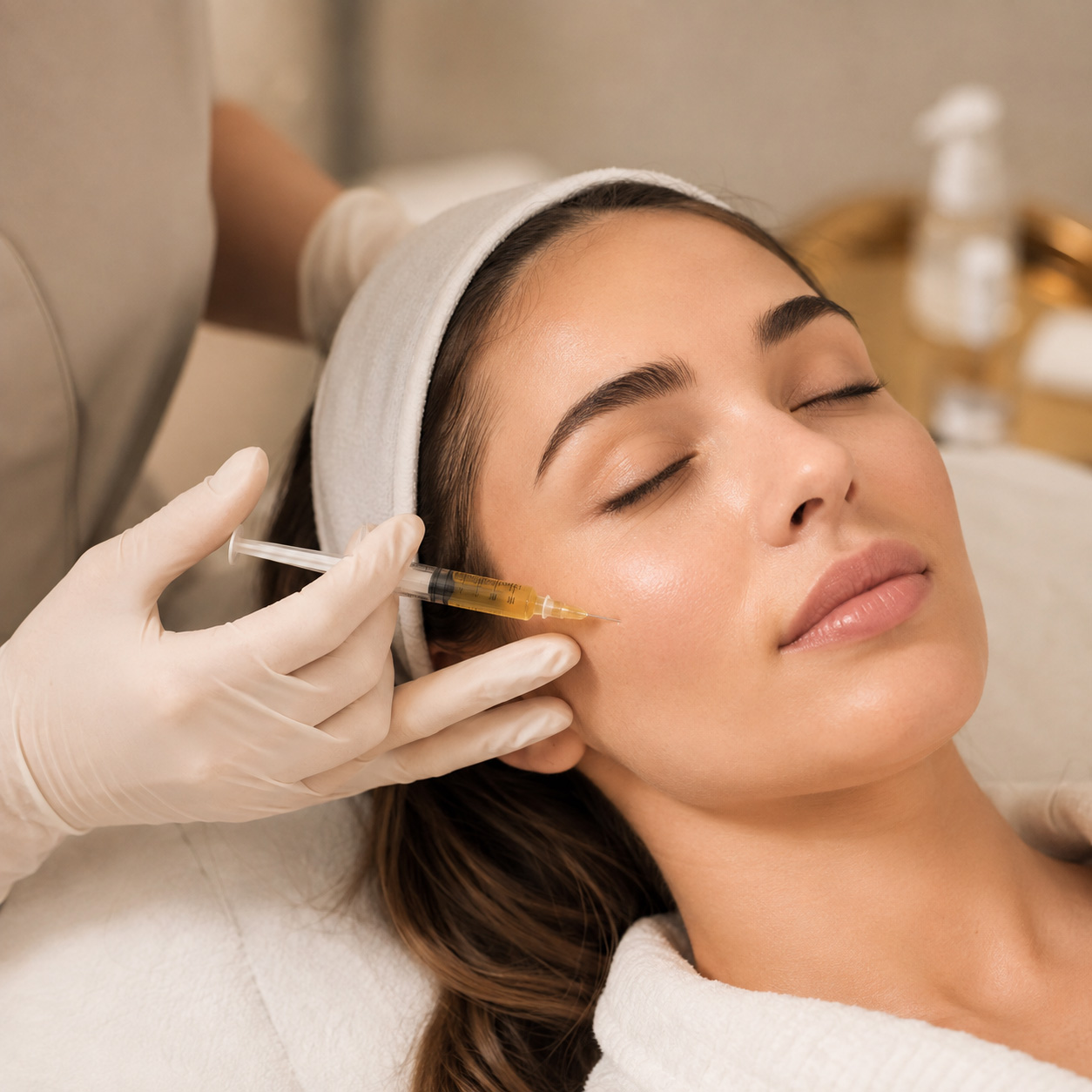
Platelet-rich plasma (PRP) uses a concentrated preparation of your own blood to stimulate the skin's natural repair and regeneration, improving quality, texture and firmness, and supporting hair growth, using nothing but your body's own growth factors. It's one of the most genuinely regenerative treatments we offer, and because it's derived entirely from you, it works with your biology rather than introducing anything foreign.
From
£350
Downtime
Minimal
Session
45–60 min
Areas
Face · Neck · Scalp
Results
Progressive over a course
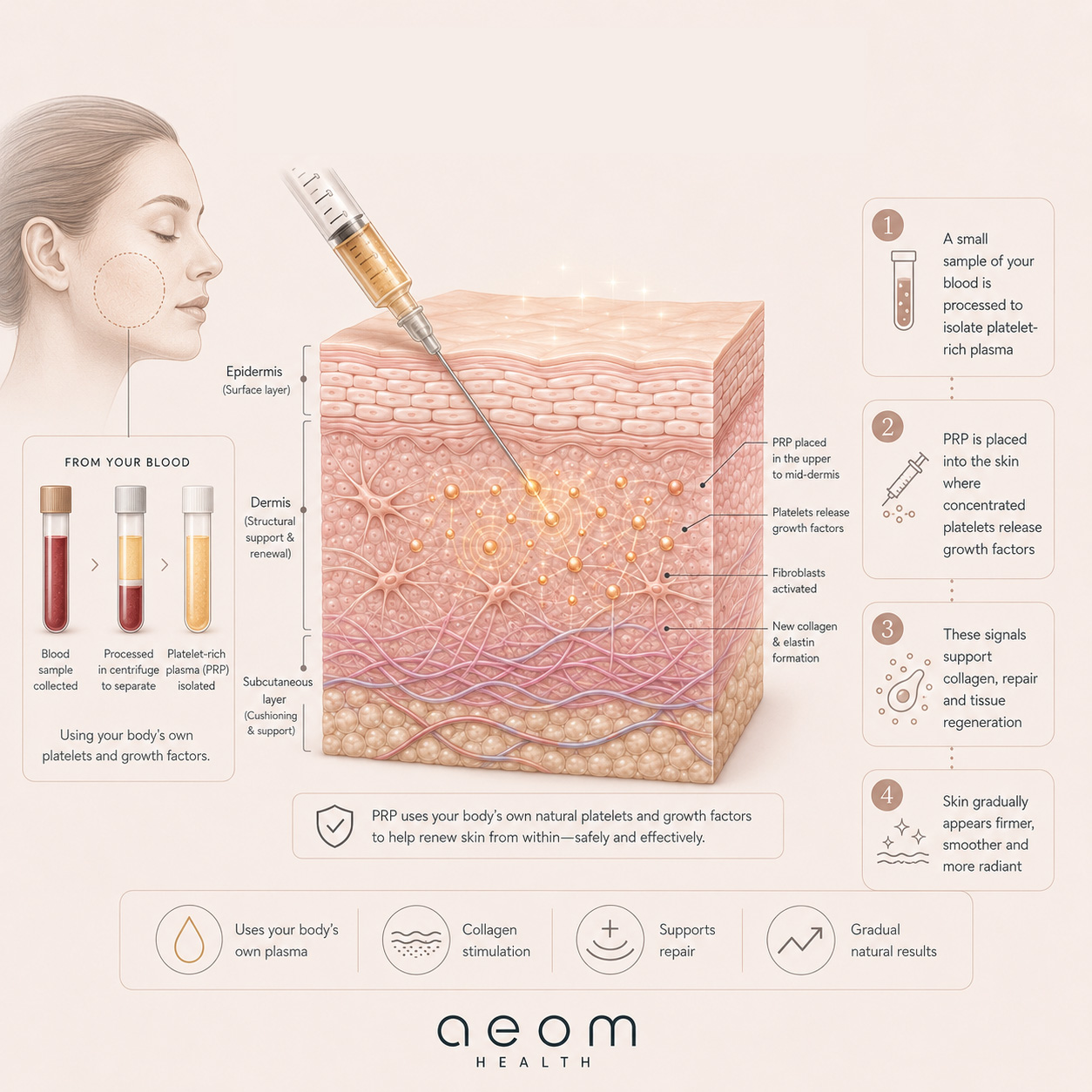
What PRP is and how it works
PRP is made from a small sample of your own blood. We draw it at the clinic, then spin it in a centrifuge to separate and concentrate the platelets, the cells rich in the growth factors your body uses to heal and regenerate tissue. This concentrated plasma is then reintroduced into the skin or scalp, where those growth factors stimulate the body's own repair processes.
In skin, PRP supports collagen production, improves texture, tone and firmness, and helps the skin behave younger from within. On the scalp, the same growth factors support the hair follicles and the environment around them, encouraging stronger, healthier growth.
Because PRP is entirely autologous, derived from you, with nothing synthetic added, it has an excellent safety profile and no risk of allergic reaction to a foreign substance. It's regeneration using your own biology.
PRP for skin
PRP treats the skin's underlying quality rather than adding volume or relaxing muscles — it's a genuine regenerative treatment. We deliver it across several areas:
- Face — overall skin quality, texture, tone and radiance, stimulating collagen for firmer, healthier skin
- Face & neck — extending the regenerative work to the neck, where skin quality often shows age
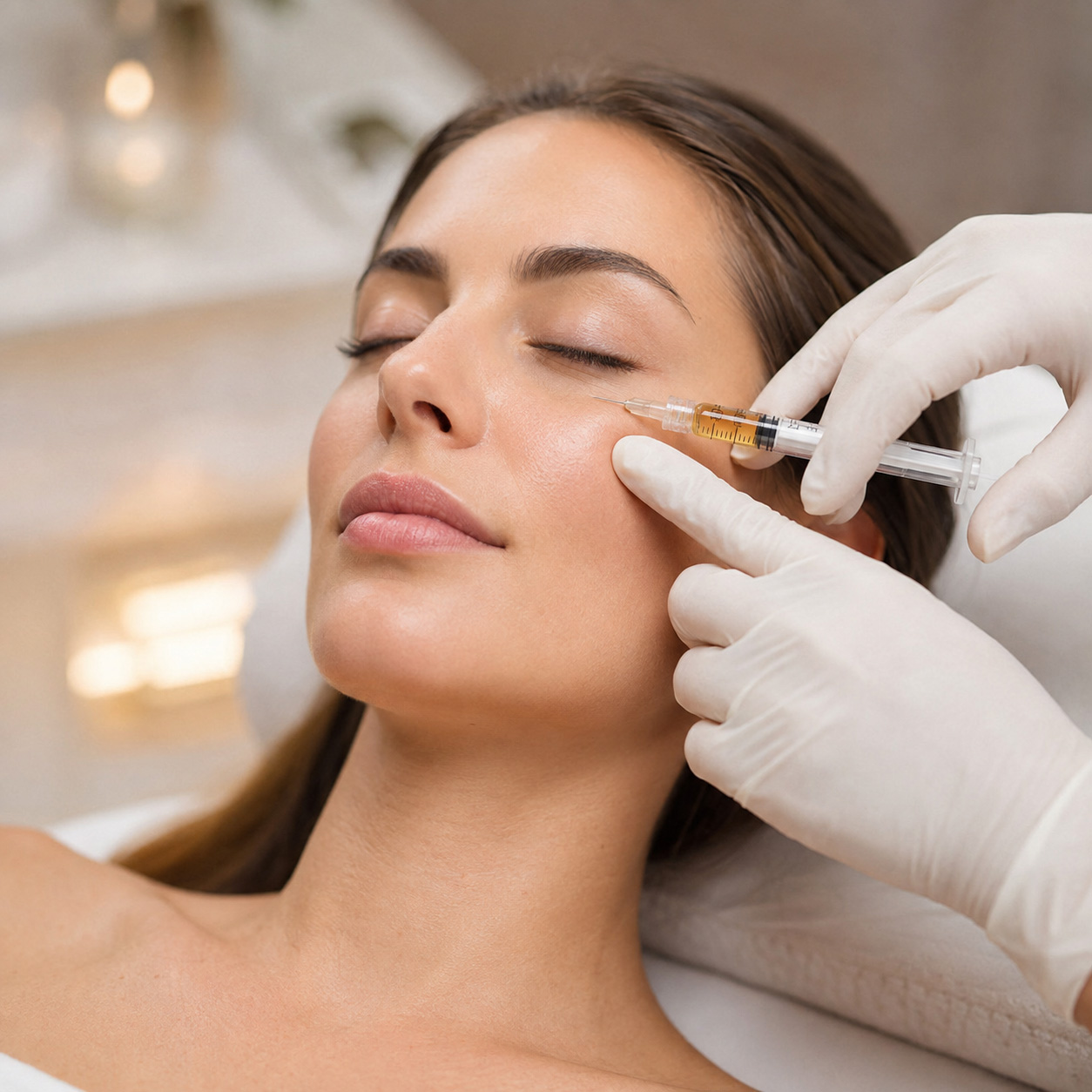
- Under-eye — one of PRP's most valued uses, improving the quality, tone and texture of the delicate under-eye skin and helping with dark, tired-looking circles where skin quality is the cause
PRP works particularly well combined with microneedling, where the growth factors are worked into the channels the needling creates, a genuinely complementary pairing that many patients choose for skin quality and texture together.
PRP for hair restoration
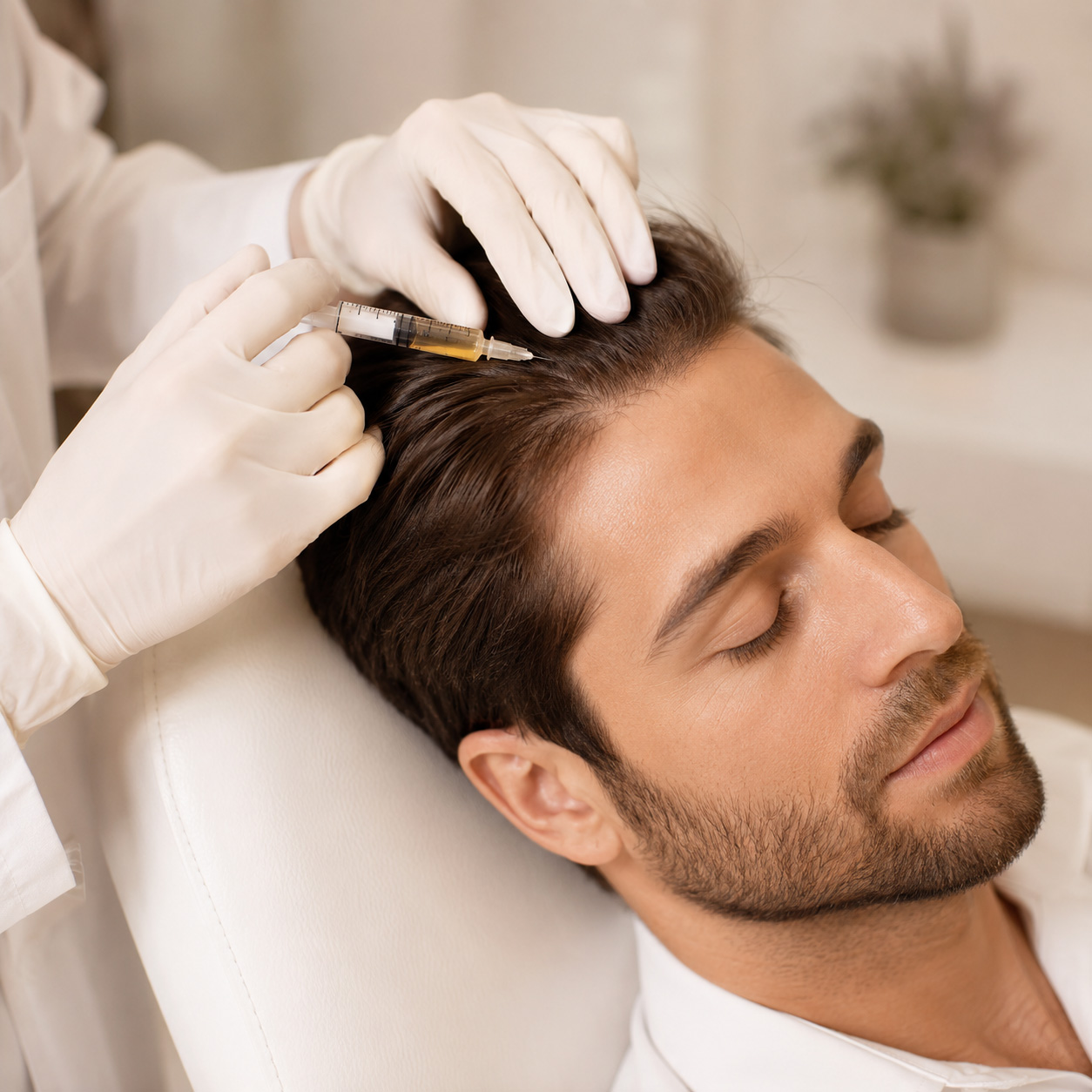
PRP is one of the most established non-surgical approaches to supporting hair. The same growth factors that regenerate skin are used to support the hair follicles and the scalp environment around them, encouraging stronger, healthier growth and helping to slow shedding.
It's well-suited to early-to-moderate thinning, and it's often combined with a scalp JetPeel, which prepares the scalp and helps the growth factors absorb. As with skin, results build across a course, and maintenance sustains them.
We're honest about candidacy: PRP supports and strengthens hair where there are still active follicles to work with. For advanced hair loss it's less effective, and we'll tell you at consultation whether PRP is genuinely the right route for your pattern of hair loss, or whether a different approach would serve you better.
WHO IT'S FOR
Who PRP is right for
Well-suited if you're looking for:
Overall improvement in skin quality, texture and firmness through a natural, regenerative treatment
Improvement in the under-eye area where skin quality and tone are the concern
Support for early-to-moderate hair thinning or shedding
A treatment that uses your own biology rather than synthetic products
Regenerative work that pairs well with microneedling and other skin treatments
Standard PRP is typically the better choice if:
Bleeding disorders or active blood-thinning medication (speak to us at consultation — risk profile shifts)
Active infections or open wounds in the treatment area
Active cancer or recent chemotherapy
Significant anaemia (we may run bloods first to confirm safety)
Pregnancy or breastfeeding — neither treatment is delivered during pregnancy
Keloid scarring history — we'd assess at consultation
WHAT TO EXPECT
Before, during and after
Before
Consultation & assessment
Every PRP patient begins with a consultation and assessment. For skin, we identify the areas and concerns to treat; for hair, we assess your pattern of thinning and whether PRP is appropriate. Avoid alcohol for 24 hours beforehand, stay well hydrated, and, if suitable, avoid blood-thinning supplements and anti-inflammatories for 48 hours before, as they can increase bruising.
During
The session
The treatment takes 45–60 minutes. We draw a small sample of your blood, then spin it in the centrifuge for a few minutes to prepare the plasma while numbing cream takes effect. The concentrated plasma is then delivered to the treatment area, by injection, or worked into the skin alongside microneedling, depending on the plan. Most patients find it very tolerable; the blood draw feels like any routine test, and numbing makes the treatment itself comfortable.
After
RECOVERY
Some redness, mild swelling or minor bruising at the treatment sites is normal and settles over a day or two. Because PRP is your own biology, there's no risk of reaction to a foreign substance. You can return to normal activities quickly, with a few simple aftercare steps we'll explain. Results build gradually over the following weeks as the regenerative process works.
RESULTS
What results actually look like
PRP is a regenerative treatment, so its effects build over time rather than appearing immediately. For skin, most patients see progressive improvement in quality, texture, firmness and radiance across a course, with the fullest results developing over the weeks that follow. For hair, changes are necessarily slower, following the hair's natural growth cycle, with improvements in shedding and hair quality typically becoming visible over several months across a course.
Because it works with your body's own repair processes, PRP produces natural, gradual change rather than a sudden result. A course delivers meaningfully more than a single session, and maintenance sustains the work. We'll set out a realistic plan and timeline at consultation, and be honest about what to expect for your specific concern.
The honest summary
PRP is a genuinely regenerative treatment, but it isn't a cure-all. It improves skin quality, it doesn't add volume or lift structurally, so for those concerns filler or Sofwave are the right treatments. For hair, it supports and strengthens where there are active follicles, but it can't restore hair that's no longer viable, and it's less effective in advanced loss. And because it's regenerative, it asks for patience, results build across a course rather than arriving overnight. We'll always tell you honestly whether PRP is the right answer for your concern, or part of a broader plan.
PRP COMPARED WITH OTHER REGENERATIVE TREATMENTS
How PRP compares to alternatives
PRP vs Hair Transplant
For hair, PRP and surgical transplantation sit at different points on the same spectrum. PRP is non-surgical and supports existing follicles, strengthening growth and slowing shedding where follicles are still active, with no downtime. A hair transplant surgically relocates follicles and is appropriate for more advanced, established loss where follicles in the affected area are no longer viable. PRP is often used earlier, to support and preserve hair before loss becomes advanced; it isn't a substitute for transplantation in significant baldness. We'll be honest at consultation about which is realistic for your pattern of loss.
PRP vs PRF
PRF, platelet-rich fibrin, is the next-generation development of PRP, and we offer both. Both are drawn from your own blood, but they're prepared differently: PRP is spun to concentrate platelets and growth factors for immediate release, while PRF is prepared without anticoagulant and at a gentler spin, forming a fibrin matrix that holds the platelets and releases their growth factors more slowly, over a longer period. In practice, PRP gives a strong initial regenerative boost, while PRF offers a slower, more sustained release. Which is right for you depends on the concern and the area, we'll explain the difference and recommend the appropriate one at consultation.
PRP vs Microneedling
These are complementary rather than competing, which is why they're so often combined. Microneedling creates controlled micro-channels that stimulate collagen and, at the same time, allow PRP's growth factors to be worked deep into the skin. Microneedling alone stimulates repair through the micro-injury; adding PRP amplifies that repair with your own regenerative growth factors. Used together, they do more than either alone.
PRP vs Skin Boosters
Both improve skin quality rather than adding volume, but they work differently. Skin boosters use hyaluronic acid to draw in and hold hydration, improving elasticity and skin quality from within. PRP uses your own growth factors to stimulate the skin's natural repair and collagen production — a regenerative rather than a hydrating mechanism. Boosters give a more immediate hydration and glow; PRP works more gradually and more deeply on the skin's own renewal. Many patients use both, for different reasons at different times.
PRICING
PRP Pricing
Treatment
Single
Course of 3
Course of 6
PRP Face
£395
£1,050
£1,895
PRP Face & Neck
£475
£1,295
£2,350
PRP Under-Eye
£350
£925
£1,695
PRP Hair Restoration
£395
£1,050
£1,750
COMBINE WITH
Treatments that combine well
with PRP
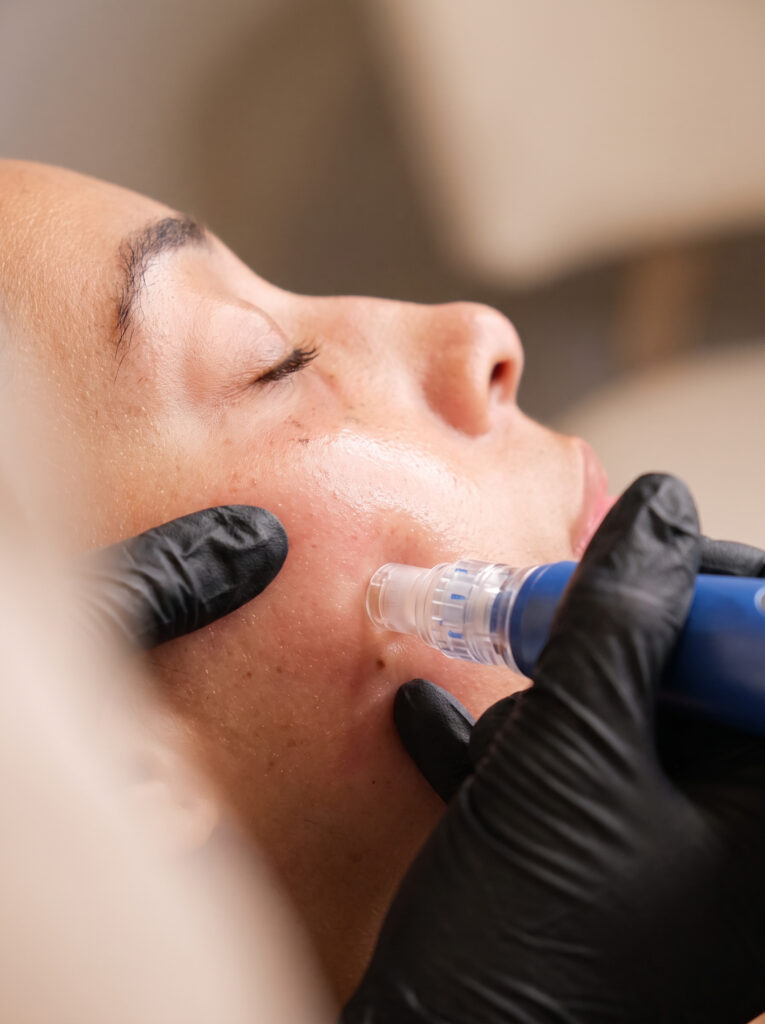
SkinPen Elite Microneedling
The natural pairing. Microneedling creates channels for the growth factors to work into, combining regenerative repair with collagen stimulation for skin quality and texture together.
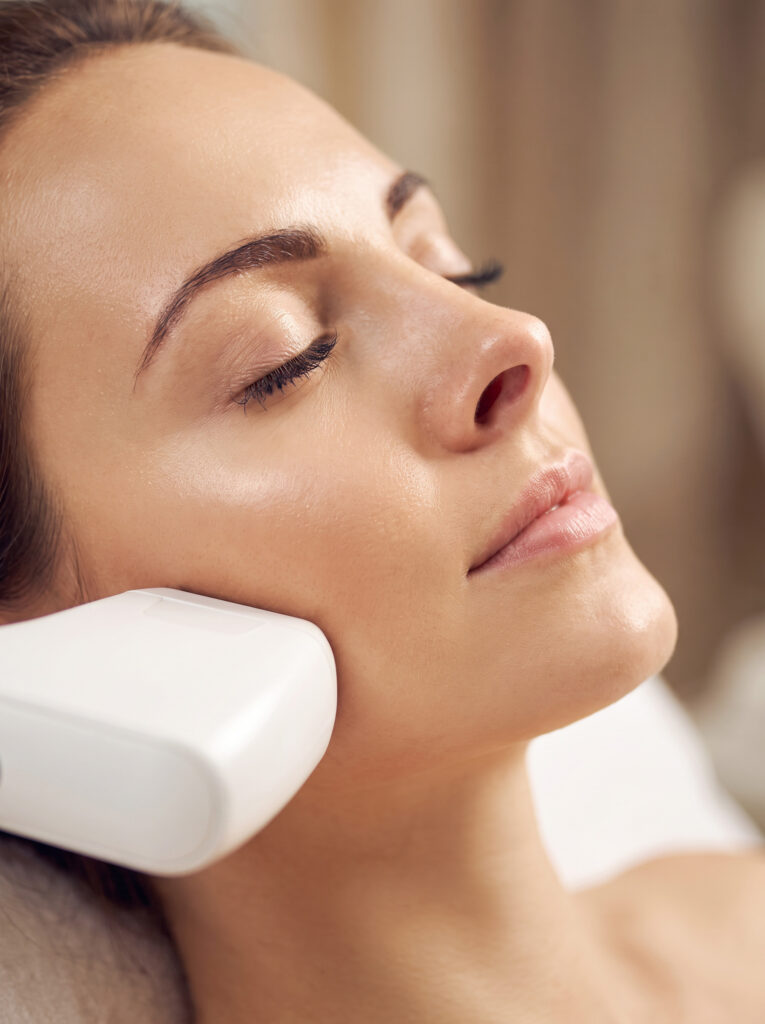
Sofwave
Sofwave for structural tightening, PRP for skin quality and regeneration, addressing firmness and skin health together, usually in separate sessions.
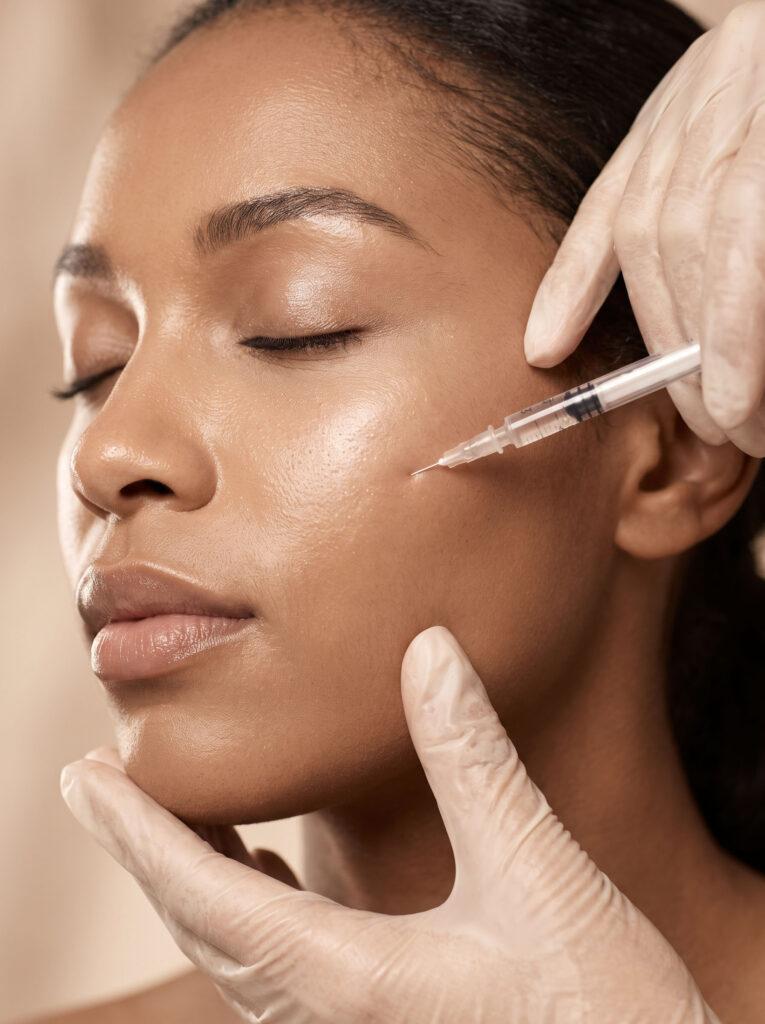
Skin Boosters
Both improve skin quality by different means; used across a plan they support hydration, regeneration and overall skin health.
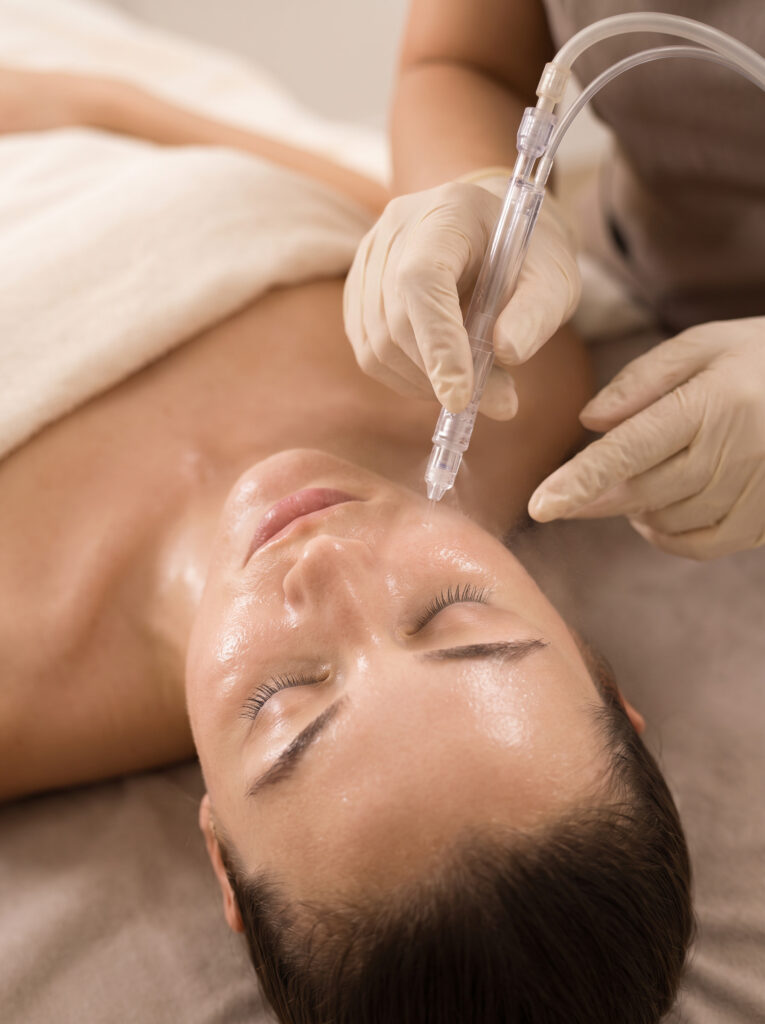
JetPeel (Scalp)
For hair, a scalp JetPeel prepares the scalp and supports absorption of the growth factors, making it a strong same-day pairing with PRP for hair.
Frequently asked questions
What's the actual difference between standard PRP and Exomine ERP?
Both treatments use your own blood to support skin regeneration, but they work at different concentrations.
Standard PRP delivers platelets and the growth factors they contain — typically as a course of three to four sessions spaced 4–6 weeks apart, with maintenance every 6–12 months. PRP with Exomine ERP uses an additional preparation step — a Microlyzer cutting tool and an Advanced PRF tube — to release approximately 90–100 billion extracellular vesicles, of which around 98% are platelet-derived exosomes according to the manufacturer's testing. The higher vesicle concentration typically allows treatment as a single session, with maintenance every six months rather than a course. At consultation, we'll discuss which is right for you based on your goals, indication and preferred treatment frequency.
Is PRP painful?
Numbing cream applied before treatment significantly reduces discomfort.
The blood draw is similar to a routine blood test. The injections themselves feel like small pinches, with mild discomfort that settles quickly. Most patients describe the treatment as well-tolerated. The Exomine ERP version takes longer overall due to the preparation time but the actual injection portion is similar to standard PRP.
Is PRP safe?
Yes — PRP is one of the safest aesthetic treatments available because the active component comes from your own blood, eliminating allergy and rejection risk. The safety profile is well-established across decades of clinical use in medicine and aesthetics. Standard precautions apply: we don't deliver PRP to patients with bleeding disorders, active infections, certain medications, or during pregnancy.
How long does the blood draw take?
Approximately 5–10 minutes — similar to a routine blood test. We draw approximately 20ml of blood from a vein in your arm.
Will I bruise?
Mild bruising at injection sites is possible and typically settles within 5–7 days. Bruising risk is reduced by following pre-treatment advice (avoiding blood-thinning supplements and medications where possible). Significant bruising is uncommon.
Can PRP help with hair loss?
Yes — PRP for hair restoration is one of the most established applications. PRP injected into the scalp can support hair follicle health, reduce shedding, and stimulate new growth — particularly effective for early-stage androgenic alopecia and post-pregnancy or stress-related hair thinning. For hair restoration, we typically recommend a course of three sessions, spaced 4–6 weeks apart, with maintenance every 4–6 months. We'd discuss whether standard PRP or Exomine ERP is the better choice based on your specific concerns.
Can I have PRP if I'm taking blood thinners?
Speak to us at consultation. PRP relies on platelet function, which is affected by blood-thinning medications (warfarin, apixaban, daily aspirin, etc.). Depending on the medication and dosing, PRP may or may not be appropriate — and we may recommend a different treatment route. Don't stop prescribed medication without your doctor's guidance.
How does AEOM's PRP differ from cheaper PRP services elsewhere?
The variation in PRP quality across clinics is meaningful — and underappreciated.
Key factors include: the centrifuge used (clinical-grade vs basic), the preparation protocol (single-spin vs double-spin), the quality of the collection system (sealed vs open), and the experience of the practitioner. We use clinical-grade equipment, validated protocols, and treatments are delivered by our specialist nursing team. PRP at a discount price typically reflects compromises somewhere in this chain.
Why is PRP with Exomine ERP more expensive than standard PRP?
The Exomine ERP preparation requires specialist single-use kit (the Microlyzer and Advanced PRF tube), takes 45 minutes of additional in-clinic preparation time, and produces a meaningfully higher concentration of regenerative vesicles per treatment.
The price reflects the additional consumable cost and clinical time. Calculated annually, the difference between the two routes is moderate — Exomine ERP at £1,990/year (two sessions) vs standard PRP at ~£1,650/year (course + maintenance) — but the visit pattern and per-session experience differ significantly.
Is there a difference for hair vs face treatment?
The blood draw and preparation are identical. The injection technique differs: scalp injections are delivered into the dermal layer using fine needles in a structured pattern across the affected area; facial PRP can be delivered either by injection or topically following microneedling. We'd discuss the right approach at consultation.
Can I combine PRP with anti-wrinkle injections (Botox) or fillers?
Yes, with appropriate spacing. We'd typically deliver anti-wrinkle injections at a separate appointment, spaced 2 weeks before or after PRP. Combining with fillers requires more careful planning — speak to us at consultation.
Where is AEOM located?
Our clinic is at 116 Seymour Place in Marylebone, London.
Marylebone, Baker Street and Edgware Road stations are all under ten minutes on foot. Free street parking is available after 6.30pm, with paid bays on York Street nearby — daytime parking is reimbursed for treatments over £200. Treatments are by appointment only.
Ready to discuss PRP?
Both PRP routes are well-established and well-evidenced — but the right choice between them depends on your specific concerns, goals and visit preferences. Book a consultation and we'll discuss which protocol is most appropriate for you, and how it fits into your broader skin or hair plan.